Scholarly Summit is committed to maintaining a fair, transparent, and rigorous peer-review process that supports the quality, integrity, and credibility of scholarly research. All submitted manuscripts are evaluated according to the relevant journal’s aims and scope, editorial standards, and publication ethics policies.
Upon submission, the editorial team conducts an initial assessment to determine whether the manuscript is suitable for the journal and meets the basic submission requirements.
The screening may consider:
Manuscripts that do not meet the journal’s requirements may be returned to the authors for correction or declined before external peer review.
Scholarly Summit journals follow a double-blind peer-review process. Under this model, authors and reviewers are not informed of one another’s identities during the review process.
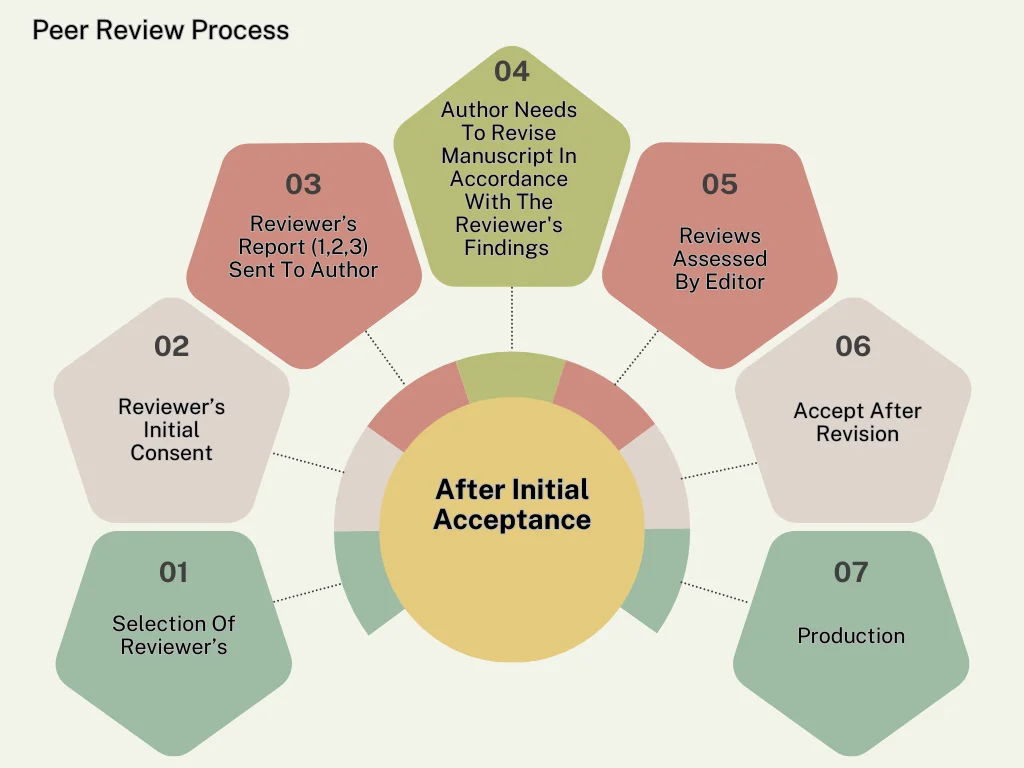
Manuscripts that pass the initial screening are evaluated by independent reviewers with relevant subject expertise. Reviewers are expected to provide objective, constructive, and evidence-based assessments of the submitted work.
To support anonymous review, authors should remove identifying information from the review manuscript in accordance with the journal’s submission instructions. Reviewers must maintain confidentiality and should inform the editorial office if they identify a potential conflict of interest or believe they can identify an author in a way that may affect their impartiality.
Double-blind review is intended to reduce potential bias; it cannot guarantee that identities will never be inferred.
Reviewers are selected according to their relevant academic qualifications, subject expertise, research experience, and ability to assess the manuscript fairly.
The editorial team seeks independent reviewers who can evaluate the work objectively. Potential conflicts of interest are considered when reviewers are selected. Reviewers must disclose any actual or potential conflict that could compromise their impartiality.
For research articles, Scholarly Summit’s intended standard is assessment by at least two independent reviewers before an editorial decision is made. A manuscript may require additional expert opinions when the reports are conflicting or further assessment is necessary.
Reviewers are asked to assess manuscripts according to the nature of the research and the relevant journal’s scope. Their evaluations may address:
Reviewers should provide specific, respectful, and constructive comments that help authors understand the strengths and limitations of their work.
After evaluating a manuscript, reviewers provide their comments and recommendation to the editorial team. Recommendations may include acceptance, minor revision, major revision, or rejection.
Reviewer recommendations are advisory and do not, by themselves, determine the final outcome. The authorized editor considers the reviewers’ assessments, the manuscript’s scholarly merit, relevant ethical considerations, and the journal’s editorial standards before making a decision.
The handling editor evaluates the available reviewer reports and communicates the editorial decision to the corresponding author.
Possible decisions include:
If reviewer reports conflict or raise unresolved concerns, the editor may seek additional expert advice before deciding. Editorial decisions must be based on scholarly and ethical considerations, independently of publication fees.
When revisions are requested, authors should submit a revised manuscript together with a point-by-point response explaining how each reviewer and editor comment has been addressed.
Revised manuscripts may be returned to the original reviewers or assessed by the handling editor, depending on the extent of the revisions and the issues raised. Further revisions may be requested when necessary.
A revision invitation does not guarantee acceptance. The final outcome depends on the quality of the revised manuscript and whether the outstanding concerns have been adequately resolved.
Manuscripts and review reports must be treated as confidential throughout the peer-review process. Reviewers must not share unpublished material, use confidential information for personal advantage, or disclose manuscript details without appropriate authorization.
Reviewers and editors must disclose relevant conflicts of interest and should not participate in decisions where their impartiality may be compromised.
Any concerns about plagiarism, duplicate publication, data integrity, ethical approval, authorship, or other potential misconduct should be reported confidentially to the editorial office for appropriate assessment.
The time required for peer review varies according to manuscript complexity, reviewer availability, the need for additional assessments, and the extent of revisions.
Scholarly Summit aims to process manuscripts as efficiently as possible while maintaining appropriate review standards. Where delays occur, authors should be kept informed of material developments. No specific review or publication date is guaranteed.
A manuscript proceeds to production only after formal acceptance by the authorized editor. Accepted manuscripts then undergo the applicable production and proofreading procedures before publication.
The journal’s publication procedures, copyright terms, open-access license, and applicable publication charges are communicated through the relevant policy pages and author guidelines.
For questions concerning the review process, manuscript status, reviewer comments, or editorial decisions, authors may contact the editorial office at editorial@scholarlysummit.com.
Scholarly Summit aims to ensure that peer review is conducted fairly, confidentially, and consistently with the standards of responsible scholarly publishing.